Narita Airport Terminals
Tokyo Narita Airport Terminals Guide (NRT)
Tokyo Narita International Airport consists of three passenger terminals handling both international and domestic flights. Narita is one of Asia’s largest international airports and one of the main gateways to Japan. Each terminal offers extensive shopping, restaurants, lounges, transport connections and premium passenger facilities.
Terminal 1 mainly serves Star Alliance and SkyTeam airlines, Terminal 2 is primarily used by Oneworld carriers and several international airlines, while Terminal 3 focuses mainly on low-cost carriers.
Narita Airport Terminal Map
Narita Airport terminals are connected by free shuttle buses and pedestrian walkways between Terminal 2 and Terminal 3.
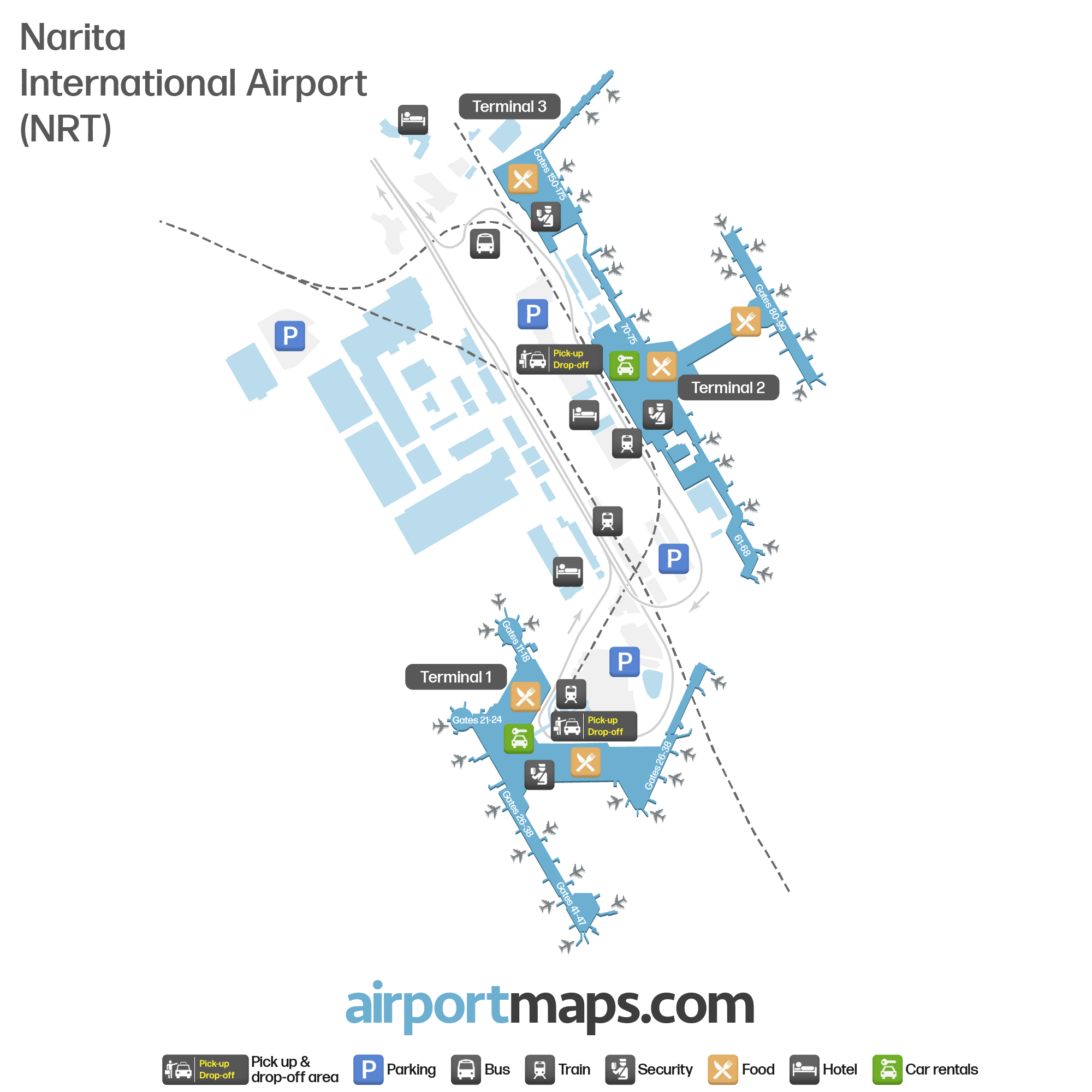
Terminal Overview
Terminal 1
Terminal 1 is Narita Airport’s largest and most premium terminal. It is divided into North Wing and South Wing sections connected by a central building. The terminal mainly serves Star Alliance and SkyTeam airlines.
- Home to ANA, United Airlines, Lufthansa and Air France
- Large shopping and dining areas
- Observation deck on the upper floor
- Direct JR and Keisei rail access on basement level
- Excellent lounges and premium services
Terminal 1 offers some of the best airport shopping in Japan, including Japanese souvenirs, electronics and luxury brands.
Terminal 1 Levels
- B1: Train stations, ticket counters, SIM cards, baggage services
- 1F: Arrivals, baggage claim, bus and taxi services
- 4F: Check-in and departures
- 5F: Restaurants, observation deck and lounges
Terminal 2
Terminal 2 is one of Narita Airport’s busiest terminals and mainly serves Oneworld airlines, including Japan Airlines. Several international and Asian carriers also operate from Terminal 2.
- Large international departures area
- Extensive duty free shopping
- Excellent transport access
- Connected to Terminal 3 by walkway
- Wide selection of restaurants and cafés
Terminal 2 includes “Narita 5th Avenue”, one of Japan’s largest airport duty free shopping areas.
Terminal 2 Highlights
- Japan Airlines hub terminal
- Direct access to Narita Express and Skyliner
- Anime and Japanese culture shops
- Good family facilities
- Large international departures zone
Terminal 3
Terminal 3 was opened in 2015 and is dedicated mainly to low-cost carriers. It offers a more simplified airport experience with lower operating costs and efficient passenger flow.
- Mainly used by Jetstar, Peach and low-cost airlines
- Simple and functional design
- Connected to Terminal 2 by pedestrian walkway
- 24-hour food court available
- Lower-cost shopping and dining options
Terminal 3 involves more walking than the other terminals, especially when transferring to trains at Terminal 2 station.
Facilities & Services Across All Terminals
Transfers Between Terminals
Narita Airport provides free shuttle buses between all terminals. Terminal 2 and Terminal 3 are also connected by a covered pedestrian walkway.
- Free shuttle buses operate every few minutes
- Terminal 2 ↔ Terminal 3 walking time: around 10-15 minutes
- Terminal 1 requires shuttle bus connection
- Extra time should be allowed during busy periods
Narita Airport Satellite Map
Explore Narita Airport terminals and surrounding areas through Google Maps satellite view:
Narita Airport Walking Tour Video
Watch a walking tour of Tokyo Narita Airport terminals and departures areas:
Terminal Tips & Recommendations
- Terminal 1 offers the best premium experience and lounges.
- Terminal 2 is ideal for shopping and Japanese souvenirs.
- Terminal 3 is efficient but involves more walking.
- Allow additional transfer time between terminals.
- Train stations are located directly below Terminals 1 and 2.
- Observation decks at Terminals 1 and 2 are excellent for plane spotting.